What happens after the prison gate? The missing link in reintegration.

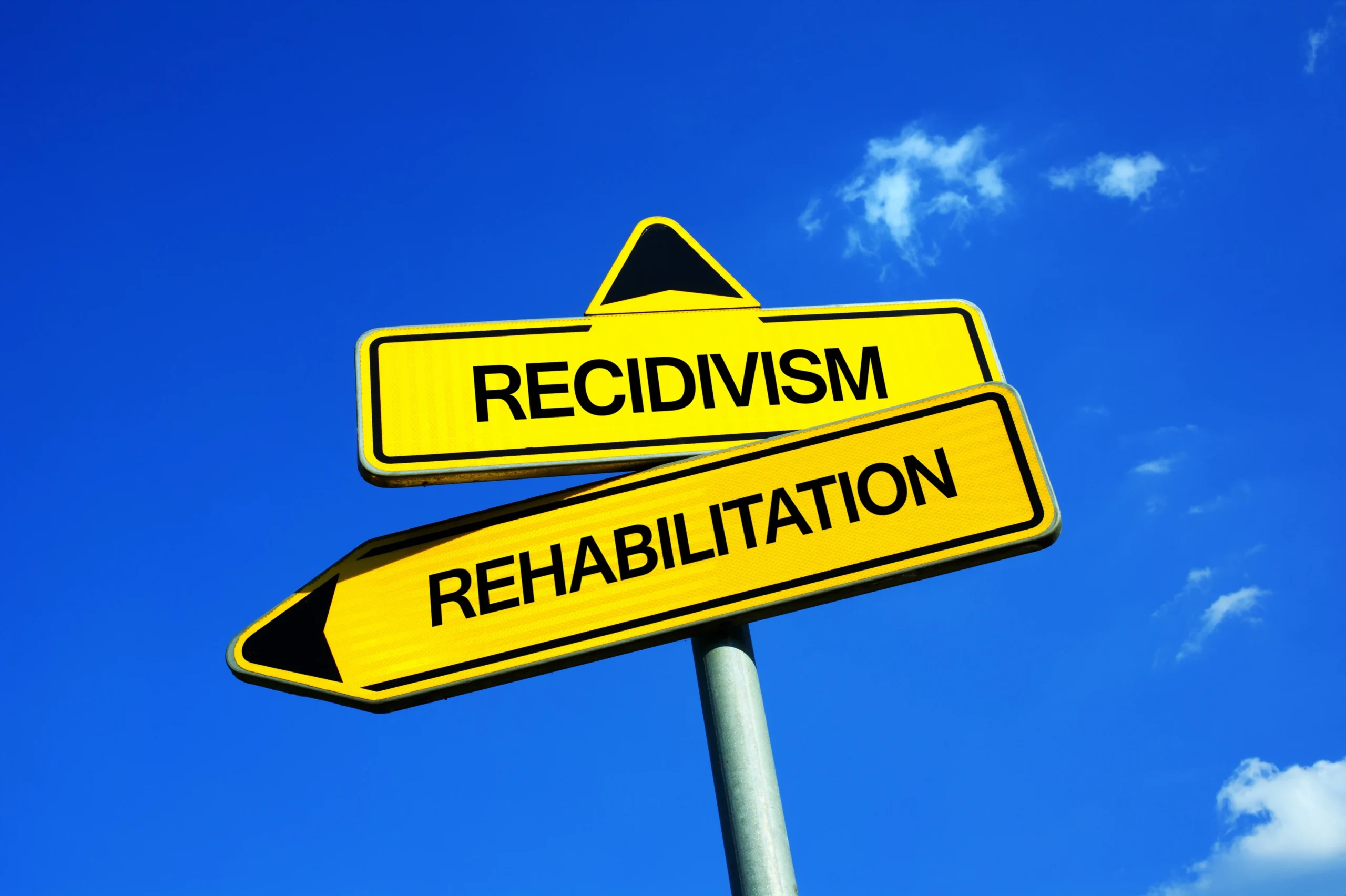
Why should we care what happens to a young person who ends up behind bars? The answer is simple: because the figures tell us that the future of our safety depends on it. In my recent research, I analyzed the phenomenon of recidivism and found that the current system is at a critical point.
I will present some key ideas from the paper I delivered at the Young Researchers in Law Conference on 21 November 2025, at the Academy House.
Science tells us something fascinating: a young person’s brain (the prefrontal cortex, responsible for decisions) is not fully mature until the age of 25. While this explains impulsivity, it also comes with a huge advantage, namely neuroplasticity. This is the optimal period in which psychological intervention can truly change the trajectory of a life. In practice, a young person is not a “miniature adult” but a person in full development.
I looked at models that work. In Germany, young people up to the age of 21 can be tried under juvenile criminal law if their maturity requires it, an approach that lowers the recidivism rate. In Norway, the emphasis is on the “principle of normality”; accordingly, detention must resemble real life, in small units, with access to education. The result? A recidivism rate far below that of Romania.
We also have good news: projects such as “Correctional” (2021-2025) increased psychological counseling capacity in our prisons by 70%. We have excellent programs in places such as Rahova, Bacău or Gherla.
Where is the problem? In institutional fragmentation. A young person can make enormous progress in prison, but if the moment they step outside they are abandoned by the system, without a job or a roof over their head, the earlier effort is cancelled out.
We can conclude that recidivism is not destiny. The evidence shows that we have both the science and the successful models within reach. What is missing is only a coherent mechanism to link detention to the community.
These ideas are part of my article “Young recidivist. Irreversible situation or path to rehabilitation?”, which will be published in the CTCD volume under the aegis of the Institute of Legal Research of the Romanian Academy, as part of the Young Researchers in Law Conference. For those interested in the topic of the paper, you can read the full volume at https://www.ear.ro/p/dinamica-legislativa-si-realitatea-juridica/270
Bărăgan, B. (2026). Tânăr recidivist. Situație ireversibilă sau cale spre reabilitare? In the volume Dinamica legislativă și realitatea juridică . București: Editura Academiei Române, ISBN 978-973-27-4129-0.